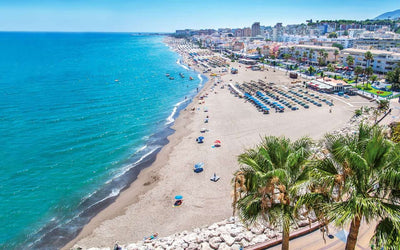
Centre Pompidou Málaga: Modern Art, Tickets & What to See
You do not have to travel to Paris to experience the world of the Centre Pompidou. At Málaga's waterfront, beneath the instantly recognisable coloured glass structure known as El Cubo, the Centre Pompidou Málaga brings modern and contemporary art to one of the most visited areas of the city.
The museum opened in 2015 as the first Centre Pompidou established outside France. Since then, it has become an important part of Málaga's transformation into one of southern Spain's most interesting cultural destinations.
Inside, exhibitions draw on the collection and artistic network of the Centre Pompidou, with works and programmes covering twentieth- and twenty-first-century art, photography, design, architecture, video and other creative disciplines.
Outside, you are already at Muelle Uno and Málaga's port.
That combination makes Centre Pompidou Málaga particularly easy to include in a wider city day.
Address: Pasaje Doctor Carrillo Casaux, s/n, Muelle Uno, Puerto de Málaga, 29016 Málaga, Spain
Opening hours: 09:30–20:00, Wednesday–Monday
Tuesday: Closed, except on certain holidays and days before holidays
Last admission: 30 minutes before closing
Best for: Modern art, contemporary culture, couples, families and architecture
Recommended visit: Approximately 1.5–2 hours
Official website: Centre Pompidou Málaga
What Is Centre Pompidou Málaga?
The Centre Pompidou Málaga is the Spanish outpost of the famous Parisian cultural institution.
It opened on 28 March 2015 and was the first Centre Pompidou project established outside France.
That makes the museum more significant than simply another contemporary art gallery in Málaga.
Its purpose is to make parts of the Centre Pompidou's artistic world accessible to a different international audience through exhibitions, cultural programmes and educational activities.
The centre works across multiple disciplines.
Depending on the current programme, visitors may encounter painting, sculpture, photography, installations, video, design, architecture or other forms of contemporary artistic expression.
Temporary exhibitions and interventions mean the experience can change substantially between visits.
First, Look at El Cubo
Before going underground, stop outside.
The colourful glass structure above the museum is known as El Cubo.
It has become one of the most recognisable contemporary landmarks around Málaga's port.
The building was constructed as a cultural space and adapted for the Centre Pompidou before the museum opened in 2015.
French artist Daniel Buren transformed the glass exterior through his installation Incubé, using coloured panels and his characteristic visual language.
The result is deliberately difficult to miss.
Blue, red, yellow and other colours turn the otherwise geometric glass cube into a piece of public art.
It also creates one of Málaga's most recognisable photography locations.
Most of the Museum Is Underground
El Cubo can make first-time visitors assume that the museum itself is contained inside the colourful structure.
It is not.
Most of the exhibition space sits below Málaga's waterfront.
This contrast is part of the architectural experience.
Above ground, you have Mediterranean sunlight, palm trees, the port and El Cubo.
Below ground, you enter a controlled museum environment dedicated to modern and contemporary art.
Allow time for both.
The exterior should not simply be treated as the entrance to the museum.
What Can You See at Centre Pompidou Málaga?
The answer changes over time.
This is important when planning your visit.
Centre Pompidou Málaga is not built around one permanent collection that remains identical year after year.
Its exhibitions evolve, drawing on works, artists and themes associated with the Centre Pompidou collection and contemporary artistic practice.
The current major exhibition is:
To Open Eyes – Miradas de artista
3 July 2025 – 31 January 2027
The exhibition approaches twentieth- and twenty-first-century art through different ways artists look at and interpret the world.
That means the museum can be worth revisiting even if you have already been to Málaga before.
Current Art Beyond the Main Exhibition
Do not assume the main collection route is everything currently available.
The museum also presents temporary exhibitions, interventions and programmes that change throughout the year.
In 2026, for example, Málaga artist Imon Boy created El intérprete, an intervention on the staircase leading towards the principal collection.
The work focuses on everyday Málaga rather than the stereotypical city presented to tourists.
Local streets, people, food, beaches and Mediterranean life become part of the artistic language.
The intervention is scheduled to remain visible until March 2027.
This is a good example of how the museum combines its international Centre Pompidou identity with Málaga's own contemporary creative scene.
Is Centre Pompidou Málaga Only for Art Experts?
No.
You do not need a background in modern art to visit.
In fact, the museum explicitly provides mediation and visitor programmes for people ranging from complete beginners to specialised audiences.
Instead of trying to understand every artwork immediately, approach the museum with curiosity.
Some works may appeal to you visually.
Others may become interesting because of their story or context.
And some may simply not connect with you at all.
That is normal in contemporary art.
A museum like Centre Pompidou Málaga works best when you allow yourself to form your own reactions rather than trying to find the "correct" response to every work.
Guided Visits Can Add Context
If you want more explanation, the museum currently offers guided or mediated visits on selected days.
Some are included with admission and do not require advance booking, although availability is limited.
English-language mediated visits are also scheduled at specific times.
Because these programmes can change, check the current Centre Pompidou Málaga visitor information before planning your day around one.
A guided visit can be particularly useful if modern art normally feels inaccessible.
Understanding the context behind a work can completely change the experience.
Is Centre Pompidou Málaga Good for Families?
Yes, especially for families who want something beyond a traditional museum visit.
The centre has a dedicated Espacio Público Joven and regularly develops experiences intended for younger audiences and families.
The current programme includes La Casa Mágica + Juego de volúmenes, scheduled from February 2026 into 2027.
Family visits are also available for children from around six years old and their accompanying adults.
This does not mean every child will suddenly become fascinated by contemporary art.
But the interactive and educational approach can make the museum more accessible than parents might initially expect.
Centre Pompidou Málaga Opening Hours
The museum's standard current schedule is:
Monday: 09:30–20:00
Tuesday: Closed
Wednesday: 09:30–20:00
Thursday: 09:30–20:00
Friday: 09:30–20:00
Saturday: 09:30–20:00
Sunday: 09:30–20:00
Last admission is normally 30 minutes before closing.
The museum closes on 1 January and 25 December.
Tuesday arrangements can differ when a public holiday or the day before a holiday falls on that day.
Always check the official website shortly before visiting.
How Much Time Do You Need?
For most first-time visitors, allow approximately 1.5–2 hours.
If you are particularly interested in contemporary art or want to visit multiple temporary exhibitions, you can easily stay longer.
Visitors who mainly want to see the principal collection and experience the building may need less time.
One advantage is that the museum's location gives you complete flexibility afterwards.
You step outside directly into one of Málaga's most attractive waterfront areas.
When Is the Best Time to Visit?
There is no single perfect time.
Morning works well if you want to combine the museum with a full sightseeing day.
Late afternoon is particularly attractive if you want to walk around Muelle Uno afterwards and continue towards sunset.
The museum is also an excellent option during the hottest part of a summer day.
Spend the morning exploring Málaga outdoors, move inside for art during the afternoon heat and return to the waterfront later.
On a rare rainy Costa del Sol day, Centre Pompidou Málaga becomes an even more obvious choice.
Explore Muelle Uno Before or After Your Visit
The museum sits directly at Muelle Uno and La Farola.
Do not visit the museum and immediately leave the area.
Muelle Uno combines Málaga's port with restaurants, shops, walking areas and views across the waterfront.
Continue towards La Farola, Málaga's historic lighthouse, or simply walk beside the marina.
The contrast with the underground museum works particularly well.
You move from contemporary art directly into Mediterranean Málaga.
Walk to Playa de la Malagueta
Want some beach time?
Playa de la Malagueta is within easy walking distance.
That means you can combine culture and beach without needing a car or taxi.
For example:
morning sightseeing → Centre Pompidou → Muelle Uno → Malagueta beach
This is one of the reasons we like the museum as part of a Málaga itinerary rather than treating it as an isolated attraction.
Combine Modern Art with Málaga's Ancient History
For a completely different cultural experience, walk towards the Málaga Alcazaba and Roman Theatre.
The contrast is enormous.
At Centre Pompidou you explore twentieth- and twenty-first-century artistic ideas.
A short walk away, you can stand beside a Roman theatre and then enter a medieval Islamic fortress.
Few city itineraries demonstrate Málaga's historical range more clearly.
Continue Towards the Cathedral and Picasso
From the Roman Theatre, enter the historic centre and continue towards Málaga Cathedral.
If you want to turn the day into a serious art itinerary, add Museo Picasso Málaga.
The two museums should not be considered substitutes.
Museo Picasso focuses on one of the twentieth century's most influential artists and his development across a lifetime.
Centre Pompidou offers a broader perspective on modern and contemporary artistic movements.
Visiting both gives you a much richer cultural day.
Add Calle Larios and Atarazanas
Want to experience more everyday city life between the cultural attractions?
Walk through Calle Larios and continue towards Mercado de Atarazanas Málaga.
The market is particularly suitable for the morning because it currently closes at 15:00.
That suggests a logical order:
Atarazanas → historic centre → museum → waterfront
You move naturally through Málaga rather than repeatedly crossing the city.
Make More of Your Málaga Day with Costa Card
One museum does not need to define your entire day.
Use Centre Pompidou Málaga as one cultural anchor and build the rest around free landmarks, beaches, food and selected experiences.
Explore Costa Card to discover participating activities and benefits that can fit around your Málaga plans.
For a simple food stop, Nitte Gelato is one participating option in Málaga and can be incorporated naturally into a day of walking through the city.
The idea is not to turn every stop into a commercial activity.
Use the free city around you and your Costa Card benefits selectively where they improve the day.
Use the Málaga City & Culture Route
If you prefer some structure, explore our Málaga City & Culture route.
It provides inspiration for combining cultural sightseeing with selected Costa Card experiences.
You can follow the entire route or simply borrow individual ideas.
This works particularly well in Málaga because many of the city's major attractions are concentrated within a walkable central area.
Example: A Complete Art & Culture Day in Málaga
A full day could look like this:
09:00 – Mercado de Atarazanas
Start with local food culture.
10:30 – Calle Larios and historic centre
11:15 – Málaga Cathedral
12:00 – Museo Picasso Málaga
14:00 – Lunch
15:30 – Roman Theatre and Alcazaba
17:30 – Centre Pompidou Málaga
19:00 – Muelle Uno and La Farola
20:00 – Malagueta or dinner
This itinerary is deliberately varied.
You experience food, historic streets, Picasso, Roman Málaga, Islamic Málaga, contemporary art and the Mediterranean in one day.
Is Centre Pompidou Málaga Worth Visiting?
If you enjoy modern or contemporary art, definitely.
But even visitors who are not regular museum-goers may find the combination of exhibitions, architecture and waterfront location appealing.
Its biggest strength is that Centre Pompidou Málaga does not feel detached from the city.
El Cubo has become part of Málaga's waterfront identity, while the museum sits between the historic centre and Mediterranean coastline.
Allow around two hours inside.
Then use the location to keep exploring.
From Contemporary Art to the Mediterranean
Start underground among modern and contemporary artworks.
Step outside beneath El Cubo.
Walk through Muelle Uno and finish beside the Mediterranean.
That transition captures something Málaga does particularly well: culture and holiday atmosphere do not need to compete with each other.
Want to discover more possibilities around the city? Explore Costa Card and see participating activities, routes and current benefits.
Choose the Costa Card Day Card if Málaga is your main destination for one experience-packed day.
Exploring several participating Costa del Sol destinations during your holiday? The Week Card gives you more flexibility.
Ready to experience more and pay less? Choose your Costa Card Day Card or Week Card.