Mercado de Atarazanas Málaga: What to Eat, See & Know Before You Go
If you want to experience Málaga beyond its beaches, museums and famous monuments, Mercado de Atarazanas Málaga is one of the best places to start.
This historic covered market sits right in the city centre and brings together fresh fish, seafood, fruit, vegetables, meat, olives, nuts, cheeses and other local products beneath an impressive nineteenth-century iron structure.
But Mercado de Atarazanas is much more than somewhere to buy groceries.
Its monumental entrance is a surviving reminder of Málaga's Nasrid past, its enormous stained-glass window celebrates the city and its 260 market stalls provide a colourful introduction to everyday food culture in southern Spain.
It is also completely free to enter.
Address: Calle Atarazanas, 8, 29005 Málaga, Spain
Opening hours: Monday–Saturday, 08:00–15:00
Admission: Free
Number of stalls: 260
Best for: Food lovers, couples, culture, photography and budget travellers
Recommended visit: 60–90 minutes
Best time: Approximately 09:00–11:30
Why Visit Mercado de Atarazanas Málaga?
Markets can tell you things about a destination that major tourist attractions cannot.
While Málaga's museums and monuments explain important parts of its history, Mercado de Atarazanas Málaga shows you something closer to everyday city life.
Fishmongers arrange the day's seafood over ice. Fruit and vegetable stalls create walls of colour. Other vendors specialise in meat, olives, nuts, cheeses, dried fruits, spices and traditional products.
At the same time, visitors move between the stalls taking photographs, ordering something to eat or simply absorbing the atmosphere.
That combination is precisely what makes the market interesting.
It is both a working municipal market and one of Málaga's most characteristic visitor experiences.
A Market with More Than 600 Years of History
Before walking inside, look carefully at the main entrance.
It reveals the oldest part of the story.
The site of Mercado de Atarazanas Málaga was occupied by Nasrid shipyards during the fourteenth century.
The Spanish word atarazana refers to a shipyard or arsenal, which explains the market's name.
Most of the medieval complex disappeared over the centuries, but its monumental marble gateway survived.
When architect Joaquín de Rucoba designed the current market between 1876 and 1879, the historic gateway was incorporated into the centre of the new main façade.
The result is unusual.
A nineteenth-century iron market building is entered through a physical reminder of medieval Islamic Málaga.
You therefore begin discovering the city's history before you have even reached the first food stall.
Look at the Building, Not Only the Food
It is easy to become distracted by the stalls, but the architecture deserves attention too.
The current building uses a predominantly iron structural framework, reflecting Málaga's industrial development during the nineteenth century.
Its architectural design also deliberately incorporates neo-Arabic elements that acknowledge the site's earlier Nasrid history.
The market was officially declared a Bien de Interés Cultural in 1979, recognising its cultural and architectural importance.
A major restoration completed in 2010 helped recover elements of the original design.
So when you visit Mercado de Atarazanas Málaga, you are not simply walking through a convenient food hall. You are entering a protected historic building that reflects several different chapters of Málaga's development.
Don't Miss the Stained-Glass Window
Walk towards the opposite end of the market and look back.
One of the building's most recognisable features is its enormous stained-glass window.
The colourful glass depicts historic and monumental scenes connected with Málaga.
Natural light passing through the glass gives this end of the market a completely different appearance from the stone gateway outside.
For photographers, it is one of the most interesting details in the building.
Try viewing it from several positions rather than taking the first photograph and moving on.
The combination of ironwork, coloured glass and busy market stalls creates one of central Málaga's most characteristic interior scenes.
What Can You Buy at Mercado de Atarazanas?
The market currently contains 260 stalls, so there is considerably more to see than many first-time visitors expect.
Fresh fish and seafood are obvious highlights.
Málaga's relationship with the Mediterranean is reflected in counters filled with different fish, prawns, shellfish, squid and other seafood depending on availability and season.
Elsewhere you will find fruit and vegetables, meat, cheeses, olives, nuts, dried fruit, sweets, spices and other products.
If you are staying in an apartment, the market is an excellent place to shop for ingredients.
If you are staying in a hotel, you can still buy smaller products for a picnic or simply browse.
You do not need to purchase anything to enjoy the market.
Can You Eat at Mercado de Atarazanas?
Yes, and this is one of the reasons we recommend visiting before lunch.
The market is not limited to raw ingredients.
Food and drink counters around the building make it possible to stop for tapas, seafood or a drink while the market activity continues around you.
Fresh pescaito is particularly associated with the experience.
Do not expect a quiet formal restaurant.
Eating here is more about atmosphere, fresh products and being part of the market itself.
If you want to eat at a popular counter, be prepared for it to become busy as lunchtime approaches.
When Is the Best Time to Visit Mercado de Atarazanas?
The official market hours are currently:
Monday to Saturday: 08:00–15:00
For most tourists, we recommend arriving between approximately 09:00 and 11:30.
Early in the morning, vendors are still arranging products and the market can feel calmer.
As the morning develops, the atmosphere becomes livelier.
By approaching lunchtime, popular food counters and passages can become significantly busier.
In fact, visitor pressure has become substantial enough that Málaga City Council introduced additional signage in 2026 to help keep the aisles flowing and reduce disruption to commercial activity.
That makes considerate behaviour especially important: avoid blocking narrow passages simply to take photographs.
Is Mercado de Atarazanas Free?
Yes.
There is no entrance fee to enter and explore the market.
This makes Mercado de Atarazanas Málaga particularly useful when building a budget-friendly Málaga itinerary.
You can combine it with several other free experiences around the historic centre and then decide selectively where you want to spend money.
Our guide to the Best Free & Budget-Friendly Things to Do in Málaga provides more ideas.
How Long Do You Need?
For a quick walk, approximately 30–45 minutes can be enough.
We recommend 60–90 minutes if this is your first visit.
That gives you enough time to:
-
explore the different food sections;
-
look properly at the Nasrid gateway;
-
admire the stained-glass window;
-
take photographs without rushing;
-
and stop for something to eat or drink.
Food enthusiasts may easily stay longer.
The advantage is that you do not need to dedicate half your day to the market.
Its central location means you can immediately continue exploring Málaga on foot.
What to Do After Mercado de Atarazanas Málaga
Start with Calle Larios.
Málaga's famous pedestrian shopping street is only a short walk away.
Continue towards Plaza de la Constitución and enter the historic centre.
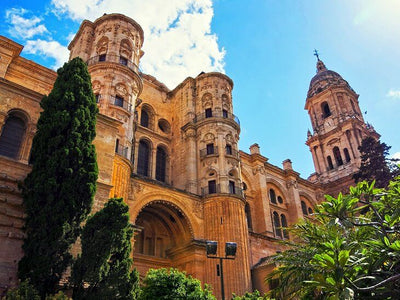
From there, walk towards Málaga Cathedral.
You have now moved from everyday Málaga food culture into one of the city's most important architectural areas without needing transport.
Add Picasso to Your Málaga Day
From the Cathedral area, continue towards Museo Picasso Málaga.
The museum sits inside Palacio de Buenavista and explores the work of Málaga-born Pablo Picasso.
Allow approximately 1.5–2 hours if you want to visit the museum properly.
This gives your day an interesting progression:
food culture → historic streets → religious architecture → modern art
And all of it is concentrated within a highly walkable part of Málaga.
Continue Through Roman and Moorish Málaga
Only a short walk from Museo Picasso you will find the Roman Theatre and Málaga Alcazaba.
This is one of our favourite combinations in the city because two completely different historic periods sit almost side by side.
The Roman Theatre introduces ancient Málaga.
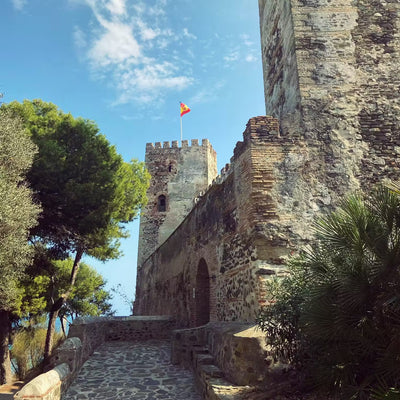
The Alcazaba takes you into the city's Islamic history.
If you started your morning at Mercado de Atarazanas, there is a satisfying connection: the market's surviving Nasrid gateway has already introduced you to part of that same historic heritage.
From the Historic Centre to the Mediterranean
Still have energy?
Walk through Parque de Málaga towards Muelle Uno and La Farola.
The atmosphere changes almost immediately.
Historic streets give way to palm trees, boats, contemporary waterfront spaces and views across the port.
From Muelle Uno, continue towards Playa de la Malagueta.
Within one day you can therefore move from a historic food market to Picasso, Roman ruins, Moorish architecture and finally the Mediterranean.
Make More of Your Málaga Day with Costa Card
Mercado de Atarazanas Málaga itself is free, and we think that is exactly how a good Costa del Sol itinerary should work.
Do not try to fill every hour with paid attractions.
Combine free landmarks, neighbourhoods, beaches and markets with a smaller number of experiences you genuinely want to do.
Explore Costa Card to see which participating activities and benefits fit around your Málaga plans.
For example, after several hours of sightseeing you could stop at Nitte Gelato, where Costa Card users currently receive 10% discount when ordering two cones or two cups of any size.
It is a small addition, but one that fits naturally into a walking day through central Málaga.
Use the Málaga City & Culture Route for Inspiration
Prefer some structure?
Our Málaga City & Culture route shows how sightseeing can be combined with participating Costa Card experiences.
You do not have to follow every stop.
Use the route as inspiration and build the day around your own interests.
That is especially useful after visiting Mercado de Atarazanas because you are already in an excellent starting position for exploring central Málaga.
Example: Build a Complete Málaga Day Around the Market
A relaxed itinerary could look like this:
09:00 – Mercado de Atarazanas Málaga
Explore while the market is fully active.
10:30 – Calle Larios and Plaza de la Constitución
Walk into the historic centre.
11:15 – Málaga Cathedral
Explore the surrounding streets and architecture.
12:30 – Lunch
14:00 – Museo Picasso Málaga
Add one of the city's most important cultural attractions.
16:00 – Roman Theatre and Alcazaba
18:00 – Costa Card experience or gelato
19:00 – Muelle Uno
20:00 – La Malagueta or dinner
You do not need to follow these times exactly.
The important point is how easily Mercado de Atarazanas Málaga can become the starting point for an entire day.
Is Mercado de Atarazanas Málaga Worth Visiting?
Absolutely.
It is free, central, historically significant and still functions as a genuine municipal market.
The building alone is worth seeing for its Nasrid gateway, iron architecture and stained-glass window.
Add 260 food stalls and the atmosphere of a working Málaga market and it becomes much more than a place to buy groceries.
Visit in the morning, arrive hungry and give yourself enough time to look beyond the food.
Then step outside and continue discovering Málaga.
Start at the Market. Discover the Rest of Málaga.
Mercado de Atarazanas gives you food, history and local atmosphere in one place.
From there, Málaga opens in almost every direction: Calle Larios, the Cathedral, Picasso, the Alcazaba, Muelle Uno and the Mediterranean.
Want more inspiration for the rest of your day? Explore Costa Card and discover participating activities, routes and current benefits.
Choose the Costa Card Day Card if you want to build one experience-packed Málaga day.
Staying longer and visiting several participating Costa del Sol destinations? The Week Card gives you more time to use the available benefits.
Ready to experience more and pay less? Choose your Costa Card Day Card or Week Card.