Frigiliana Old Town: Complete Visitor Guide 2026
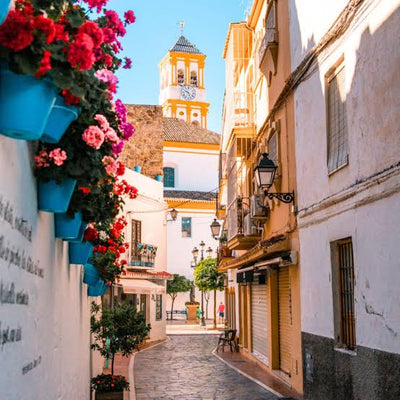
Whitewashed houses, narrow cobbled streets, colourful doors and spectacular views towards the Mediterranean: Frigiliana Old Town is one of the most beautiful places to explore in the hills above the Costa del Sol.
Located just a few kilometres inland from Nerja, Frigiliana feels very different from the busy coastal resorts. The historic centre climbs gradually up the hillside, creating a maze of small streets, stairways, viewpoints and traditional Andalusian houses.
The oldest part of the village is known as the Barribarto, or historic Moorish quarter. This is where you will find many of the streets and views that have made Frigiliana such a popular day-trip destination.
There is no major attraction you need to rush towards and no ticket required to enter the old town.
Instead, the best way to experience Frigiliana Old Town is simply to walk.
Here is everything you need to know before visiting Frigiliana in 2026.
Why Visit Frigiliana Old Town?
Frigiliana is an excellent example of how different the Costa del Sol becomes as soon as you travel a short distance inland.
Instead of beaches and promenades, you will find whitewashed houses built against the hillside.
Small passages disappear between buildings. Steps lead towards viewpoints. Plants and flowers decorate balconies and colourful ceramic details appear throughout the historic centre.
The old town has retained much of its Moorish-Mudéjar character, and the municipality describes it as one of the best-preserved historic centres of its type in Málaga province.
But you do not need to be interested in architecture or history to enjoy Frigiliana.
The village works equally well for:
-
Couples
-
Families
-
Photographers
-
History lovers
-
Food lovers
-
Visitors looking for a half-day trip
-
Travellers combining Frigiliana with Nerja
And because exploring the historic streets is free, Frigiliana is also an excellent addition to a Costa del Sol holiday on a budget.
Explore the Barribarto: Frigiliana's Historic Quarter
The highlight of any visit is the Barribarto, the upper and oldest section of Frigiliana.
This historic Moorish quarter climbs away from the lower part of town through a network of narrow streets.
Calle Real acts as one of the main routes through the historic centre.
But do not limit yourself to the main street.
Turn into the smaller passages and climb some of the stairways leading higher into the village.
This is where Frigiliana becomes particularly attractive.
White walls reflect the Andalusian sunlight, while blue doors, colourful plant pots and bougainvillea add colour to the streets.
Because the village is built on a hillside, openings between the buildings regularly reveal views across the surrounding countryside and towards the Mediterranean.
You do not need a strict walking route.
Part of the experience is simply choosing a street and seeing where it takes you.
Discover Frigiliana's Moorish History
Frigiliana's appearance is closely connected to its history.
Muslim communities lived in this part of Andalusia for centuries, and the layout of the historic quarter still reflects that heritage.
Narrow streets, covered passages and houses built closely together are typical characteristics of the Moorish urban structure that developed here.
Following the Christian conquest, tensions remained between the Morisco population and the new authorities.
This eventually contributed to the Battle of the Peñón de Frigiliana in 1569, an important episode in the history of the Axarquía.
You can learn more about this past while walking through the old town.
A series of ceramic panels placed along the historic streets tells parts of the story of Frigiliana and the Morisco uprising.
Instead of reading the village's history inside a conventional museum, you encounter it naturally while exploring the streets.
Walk Along Calle Real
If there is one street you should remember before arriving, it is Calle Real.
This is the main artery running through much of Frigiliana Old Town.
Walking along Calle Real takes you past traditional houses, shops, restaurants and several historic points of interest.
From here, smaller streets climb further into the Barribarto.
You will also encounter local shops selling ceramics, artisan products, food and souvenirs.
Rather than walking Calle Real from beginning to end without stopping, use it as the backbone of your exploration.
Turn into the side streets whenever something catches your attention and return to Calle Real afterwards.
This gives you a much better impression of the village than following only the busiest route.
See El Ingenio
One of the first major buildings you are likely to notice is El Ingenio, also known as the Palace of the Counts of Frigiliana.
The large Renaissance building dates from the sixteenth century and is one of the most recognisable historic structures in the village.
Today, the building is associated with one of Frigiliana's best-known local products: miel de caña, or sugarcane molasses.
The production of sugarcane honey has a long history in this part of Andalusia.
Even if you do not enter the building, El Ingenio is an important landmark because it marks the transition towards the historic part of Frigiliana.
Location: Plaza del Ingenio, Frigiliana, Málaga
From here, continue towards Calle Real and begin climbing into the old town.
Visit Fuente Vieja
Another small but worthwhile stop is Fuente Vieja, the Old Fountain.
The fountain dates from the seventeenth century and was commissioned during the period of the Counts of Frigiliana.
Historically, it supplied water to local residents and animals.
Today, it is one of those details that you could easily walk past without understanding its significance.
Look for it as you explore the historic quarter.
Location: Calle Chorruelo, Frigiliana, Málaga
The fountain also provides a useful excuse to move away from the busiest central streets and continue exploring the quieter parts of the old town.
Look for El Torreón
Another characteristic corner of the historic centre is El Torreón.
Located just off Calle Real, this small historic area contains one of the village's distinctive old courtyards and passages.
Like many places in Frigiliana, the attraction is not a large monument.
It is the combination of architecture, narrow passageways and historical details that makes it worth seeing.
This is also why rushing through Frigiliana rarely works.
Many of its nicest features are small.
Slow down and pay attention to the doors, archways, ceramic signs and viewpoints you encounter along the way.
Visit the Church of San Antonio de Padua
Continue through the old town and you will reach the Church of San Antonio de Padua.
The church dates from the seventeenth century and occupies a central position within the historic village.
Its white exterior fits naturally into the surrounding Andalusian architecture.
Location: Plaza de la Iglesia, Frigiliana, Málaga
The square around the church is also a pleasant place to stop for a moment before continuing through the old town.
Find the Best Views over Frigiliana
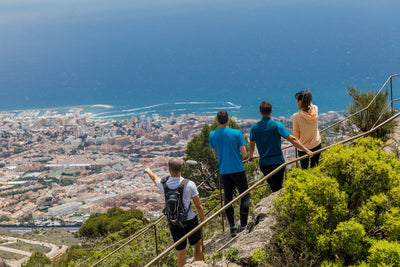
Because Frigiliana is built against a hillside, some of the best experiences come from simply climbing higher.
As you move through the Barribarto, look for openings between the buildings and streets leading upwards.
The higher parts of the old town provide views across:
-
Frigiliana itself
-
The surrounding Axarquía countryside
-
Mountain landscapes
-
Nerja and the Mediterranean in the distance
The exact view changes depending on where you are in the village.
This makes wandering without a fixed route particularly rewarding.
However, remember that the historic centre contains steep streets and many steps.
Comfortable shoes make a noticeable difference.
How Long Do You Need in Frigiliana?
For most visitors, three to four hours is enough to explore Frigiliana Old Town comfortably.
That gives you time to walk through the Barribarto, visit the main historic points, stop at viewpoints and have a coffee or lunch.
If you only have limited time, you can see the central old town in around two hours.
But Frigiliana rewards a slower pace.
Rather than treating it as a checklist of monuments, allow yourself time to wander.
If you combine Frigiliana with Nerja, the two destinations easily create a complete day trip.
Best Time to Visit Frigiliana
Frigiliana can be visited throughout the year, but the time of day makes a significant difference.
Morning
Morning is one of the best times to explore Frigiliana Old Town.
Temperatures are cooler, particularly during summer, and the streets are generally calmer before the main flow of day visitors arrives.
Start early, explore the old town and stay for lunch.
Afternoon
Afternoons can be quieter outside peak season.
During July and August, however, walking uphill through the village in the middle of the afternoon can become uncomfortable because of the heat.
If you visit during summer, avoid the hottest part of the day where possible.
Late Afternoon and Evening
Late afternoon brings softer light and beautiful views across the whitewashed houses.
It is particularly attractive for photography.
Stay into the evening and the village takes on a different atmosphere as many day visitors leave and restaurants become the focus.
Frigiliana Festival of Three Cultures
One particularly interesting time to experience Frigiliana is during the Festival Frigiliana 3 Culturas.
The festival celebrates the historical influence of Christian, Muslim and Jewish cultures.
During the event, Frigiliana hosts music, cultural activities, gastronomy and a medieval market throughout the village.
In 2026, the Festival of Three Cultures took place from 27 to 30 August.
It is one of the largest annual events in Frigiliana and creates a completely different atmosphere from a normal visit.
If you prefer quiet streets and relaxed sightseeing, however, choose another date.
Getting to Frigiliana from Nerja
Frigiliana is located only a short distance inland from Nerja, which makes combining the two particularly easy.
By Car
Driving gives you the most flexibility.
The journey from Nerja to Frigiliana is only a few kilometres and usually takes around 15 minutes depending on traffic.
As you approach the historic centre, remember that many streets are narrow or pedestrianised.
Do not plan to drive through the Barribarto itself.
Park in or around the lower part of the village and continue on foot.
By Bus
Frigiliana and Nerja are also connected by a regular local bus service.
A new timetable came into effect on 10 August 2026, with multiple services in both directions from Monday to Saturday and separate schedules on Sundays and public holidays.
During the summer season, additional late services are also available.
Because timetables can change, check the official Frigiliana municipal website before travelling.
The bus makes Frigiliana particularly accessible for travellers staying in Nerja without a rental car.
Combine Frigiliana with Nerja
Frigiliana and Nerja are one of the easiest combinations for a day trip on the eastern Costa del Sol.
You could begin your morning walking through Frigiliana before heading down towards the Mediterranean.
Once in Nerja, continue towards Balcón de Europa for panoramic views across the coastline.
We recently created a complete guide specifically for this landmark. Read our Balcón de Europa Nerja visitor guide for the history, nearby beaches, best time to visit and practical information.
A simple itinerary could look like this:
Morning: Explore Frigiliana Old Town
Lunch: Frigiliana or Nerja
Afternoon: Nerja Old Town and Balcón de Europa
Late afternoon: Beach
Evening: Dinner in Nerja
This gives you two very different sides of the region in a single day: a whitewashed Andalusian mountain village and a Mediterranean coastal town.
Combine Frigiliana with Cueva de Nerja
If you have a car and want to create a more extensive day trip, you can also include Cueva de Nerja.
The caves are located near Maro, east of Nerja, and are one of the most impressive natural attractions in Málaga province.
Inside, you can explore enormous underground chambers filled with stalactites and stalagmites while discovering the prehistoric history of the cave.
Before visiting, read our complete Cueva de Nerja visitor guide for current ticket information, opening hours and practical tips.
Combining all three is possible if you start early:
Morning: Cueva de Nerja
Late morning: Nerja and Balcón de Europa
Lunch: Nerja
Afternoon: Frigiliana Old Town
Evening: Dinner in Frigiliana
For a more relaxed experience, however, choose two of the three and give yourself more time to enjoy each destination.
Is Frigiliana Free to Visit?
Yes.
Exploring Frigiliana Old Town is completely free.
There is no entrance fee to walk through the historic quarter, see its streets or enjoy the viewpoints.
You may naturally spend money on parking, food, shopping or individual experiences, but the main attraction is the village itself.
That makes Frigiliana an excellent option if you are looking for a memorable Costa del Sol experience without buying another attraction ticket.
Make Frigiliana Part of Your Costa del Sol Holiday
Frigiliana demonstrates how much variety exists beyond the beaches of the Costa del Sol.
Within a relatively short distance from Nerja, the Mediterranean coastline gives way to hills, white villages and a completely different Andalusian landscape.
Spend a morning wandering through the Barribarto, stop for lunch and then continue towards Nerja for an afternoon beside the Mediterranean.
Or make Frigiliana your main destination and simply take your time.
There is no need to rush between attractions.
The streets themselves are the attraction.
Is Frigiliana Worth Visiting?
Absolutely. Frigiliana Old Town is one of the easiest places to recommend if you want to see another side of the Costa del Sol.
It offers history, traditional Andalusian architecture, mountain scenery and beautiful viewpoints without requiring tickets or complicated planning.
Allow at least a few hours, wear comfortable shoes and do not restrict yourself to Calle Real. Climb into the Barribarto, explore the smaller streets and take your time.
And once you have explored Frigiliana, there is much more to discover across the region.
From mountain villages and beaches to family attractions, outdoor adventures, restaurants and unique local experiences, Costa Card helps you find more inspiration and get more out of your time on the Costa del Sol.
Visit the Costa Card homepage to discover more things to do, plan your next day out and explore exclusive benefits at 50+ local experiences throughout the region.
Experience more, pay less and discover more of the Costa del Sol with Costa Card.